 +91-9784559999
 info@thournatureresorts.com
Leopards are among the most adaptable hunters in the cat family, and the leopards of Jawai are a particularly striking example: they live in close, daily proximity to people, herding communities, and grazing livestock, while still behaving as fully wild predators. That combination of comfort around humans without dependence on them is what makes Jawai’s leopard population such a rare case study for conservationists.
Why Jawai Leopards Are So Visible
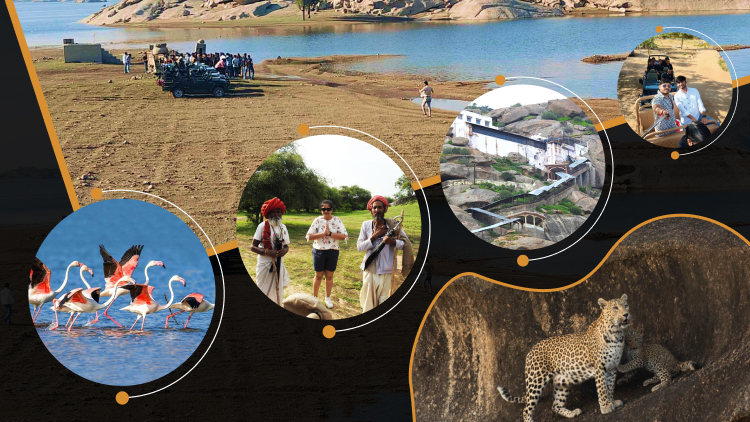
Jawai, in Rajasthan’s Pali district, is known for leopards that move across open granite hills in full view of the villages below, rather than staying hidden in dense forest cover. Wildlife biologists attribute this largely to habitat: Jawai’s terrain is open rock and scrub rather than closed-canopy forest, so leopards here rely on caves and boulder cover for concealment rather than tree cover, which makes them far easier to spot than leopard populations elsewhere in India.
Leopards generally avoid humans and prefer to hunt other animals over livestock or people. Their typical prey includes langurs and other primates, deer, wild boar, hares, and when wild prey is scarce, domestic livestock such as goats and calves that stray from a herd. In Jawai specifically, the reserve’s mix of wild boar, jackals, striped hyenas, nilgai, and other mammals gives leopards enough natural prey that they aren’t dependent on livestock, which is part of why conflict here stays lower than in many other leopard landscapes.
How Leopards Actually Hunt
Leopards are ambush predators, not pursuit hunters like cheetahs. They rely on stealth, patience, and cover rather than speed over distance. General, well-documented leopard hunting behavior includes:
Stalking, not chasing
A leopard will spend long stretches getting as close to prey as possible before a short, explosive final charge often covering the last few meters in under a second.
Dawn, dusk, and night activity
Leopards are crepuscular and nocturnal by nature, most active in low light, which is why sightings tend to cluster around early morning and the hour before sunset.
Solitary hunting
Unlike lions, leopards hunt alone, relying on individual stealth rather than coordinated pack tactics.
Caching prey
Leopards are strong climbers and will often drag a kill up a tree or into a rock crevice to protect it from scavengers like hyenas; a behavior especially suited to Jawai’s cave-riddled granite terrain.
What a standard Jawai safari can realistically show you is leopards becoming active as the light drops. Emerging from a cave, moving across a ridge, or heading toward water rather than an actual hunt or kill, which is genuinely rare to witness even for people who spend months in the field. Safaris run on the Forest Department regulated timings that end at dusk (see our safari timings guide for the current schedule). Tourist movement inside the reserve after dark generally isn’t permitted under Indian wildlife protection rules.
Is It Safe? What the Coexistence in Jawai Actually Means
Jawai’s low rate of human-leopard conflict is real and well documented, rooted in the local Rabari community’s cultural and spiritual tolerance of leopards as much as in any innate leopard “friendliness.” That said, it’s worth being accurate rather than absolute: leopards remain wild predators, and while incidents in Jawai are rare. Safaris here, like anywhere leopards live, require following your guide’s instructions and the Forest Department’s safety rules.
The honest version of Jawai’s story isn’t “leopards that never attack”; it’s a population that has, for generations, had unusually little reason to see people as a threat or a target, in a landscape where wild prey is abundant enough that livestock and humans aren’t the default option.
Frequently Asked Questions
Do Jawai leopards attack humans?
Human-leopard conflict in Jawai is significantly lower than in most other leopard landscapes in India, largely due to the Rabari community’s tolerance and abundant wild prey. Incidents are rare.
What do Jawai leopards eat?
Their diet includes langurs and other primates, deer, wild boar, hares, and other small-to-medium mammals, with livestock predation occurring occasionally when wild prey is scarce.
Can you see leopards hunting on a Jawai safari?
Safaris can show leopards becoming active at dawn and dusk moving, stalking, or heading toward water but an actual hunt or kill is rare to witness and can’t be promised on any safari.
When are leopards most active in Jawai?
Leopards are crepuscular and nocturnal, so early morning and the hour before sunset, matching standard safari timings offer the best activity levels.
Final Words
Watching a Jawai leopard move across open granite at first light is one of the more striking wildlife experiences in India not because these are “tame” cats, but because the landscape and the local culture together let them move in the open in a way leopards almost never do elsewhere.
Book your Jawai Leopard Safari with Thour Nature Resorts to experience it for yourself. This Jawai resort offers luxurious tents, spacious cottages, hill-top swimming pool, open dining area, playing area, and green lush scenic views within the property and most importantly its location. It is near Jawai bandh and terrain. You can stay alone or with family, and friends here, and enjoy safaris along with comfort. Property has the best luxury glamping tents in Jawai Rajasthan and accoutered with all the modern facilities that you find in a ritzy hotel in cities.
See it for yourself
Book your stay and leopard safari with Thour Nature Resorts, right beside the granite hills of Jawai.