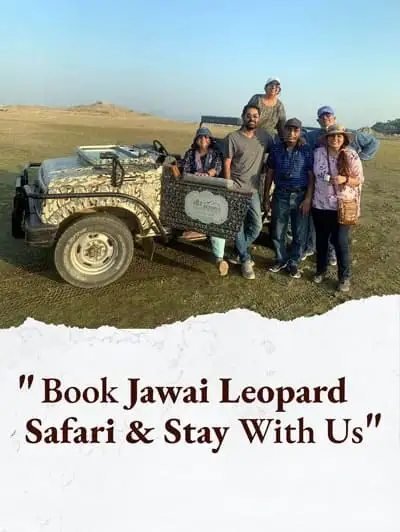
Jawai National Park – The Hidden Wildlife Gem of Rajasthan

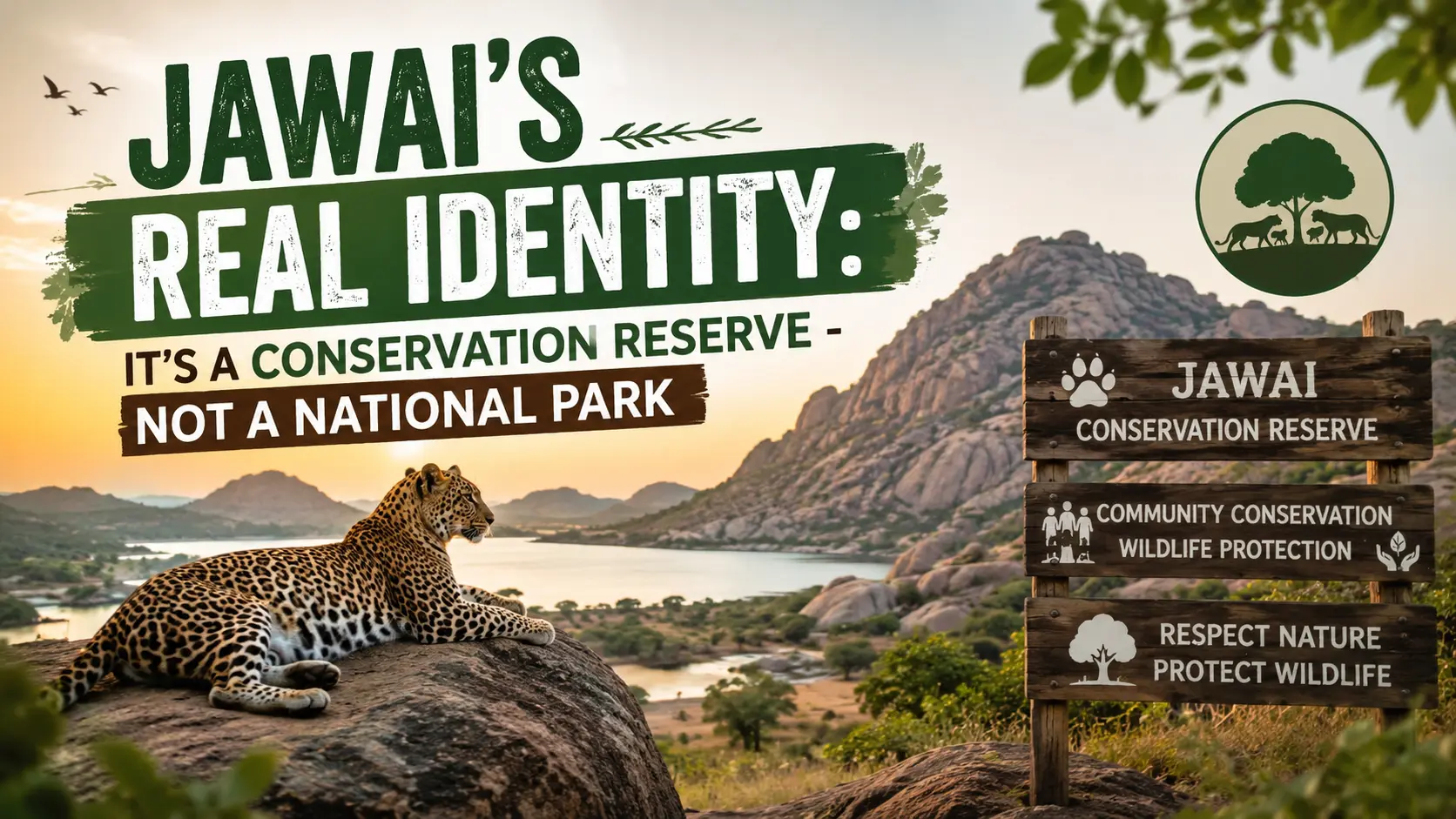
Jawai Leopard Conservation Reserve, formally notified on 23 February 2010, is home to 50–60 wild leopards — one of the highest leopard densities of any non-forested landscape on Earth. And not a single human-leopard conflict has been recorded here. Ever.

Nestled between Udaipur and Jodhpur in the Pali district of Rajasthan, Jawai is India’s most extraordinJawai National Park – The Hidden Wildlife Gem of Rajasthanary wildlife secret. Where most wildlife destinations offer animals hidden behind dense forest, Jawai puts you face-to-face with wild leopards on open granite boulders — often within metres. Add a sacred dam, 245+ bird species, ancient tribal culture, and some of the darkest night skies in Rajasthan, and you have a destination unlike anything else in India.

Unlike Ranthambore or Sariska, Jawai is not overcrowded. There are no government-declared entry zones or fixed quota permits. Safaris are intimate, personalised, and led by local trackers who have grown up alongside these leopards. If you’re planning a wildlife trip to Rajasthan, Jawai deserves the top spot on your itinerary.


Jawai National Park at a Glance

Detail Information
Official Name Jawai Bandh Leopard Conservation Reserve
Notified On 23 February 2010
Location Sumerpur Tehsil, Pali District, Rajasthan (Between Udaipur & Jodhpur)
Total Area 19.79 km² (core)
Leopard Population Estimated 50–60 individuals (highest density in non-forested India)
Key Wildlife Indian Leopard, Sloth Bear, Striped Hyena, Caracal, Mugger Crocodile, 245+ Bird Species
Safari Zones Bera, Kothar, Jeewada, Sena, Rughnathpura, Varawal, Bisalpur, Tela, Terua
Best Time to Visit October to March (Peak: November–February)
Nearest Railway Mori Bera Station (4 km)
Nearest Airport Udaipur – Maharana Pratap Airport (~150 km)
Safari Type Private Open Jeep (4×4) — Morning & Evening
Man-Animal Conflict ZERO incidents recorded in recorded history
Open Season Early September to Mid-May (Year-round for most zones)

What is Jawai Leopard Conservation Reserve?

The Jawai Bandh Leopard Conservation Reserve is a protected wildlife area in the Sumerpur tehsil of Pali district, Rajasthan. It was formally notified on 23 February 2010 to protect the region’s remarkable cave-dwelling leopard population. The terrain is unlike any other wildlife sanctuary in India — dramatic granite outcrops, rocky caves, scrubland, and river valleys replace the usual dense jungle, making leopard sightings far more frequent and visually spectacular.

The reserve takes its name from the nearby Jawai Dam, a large earthen-and-masonry reservoir on the Jawai River (a tributary of the Luni River). The core reserve covers 19.79 km², but the broader safari zone spans approximately 60 km², encompassing 16 villages and 9 prime leopard-spotting zones.

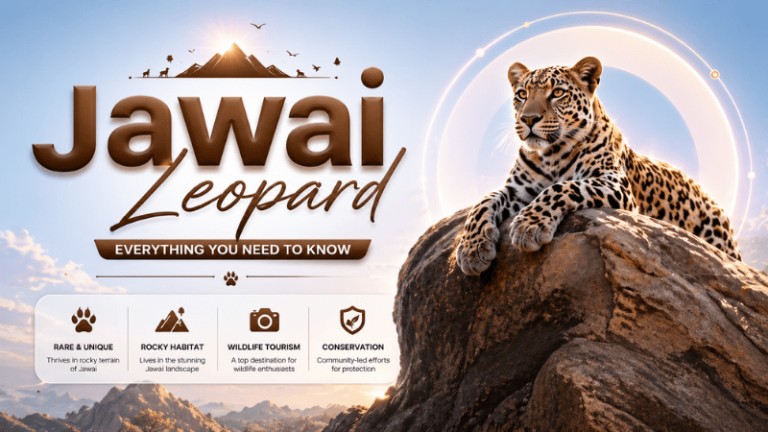
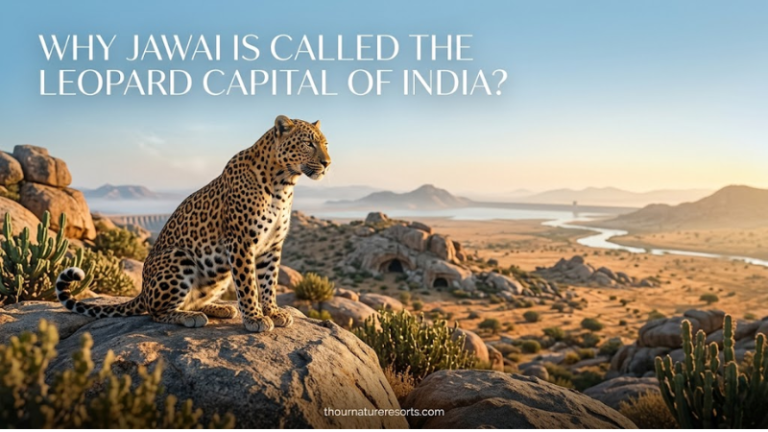
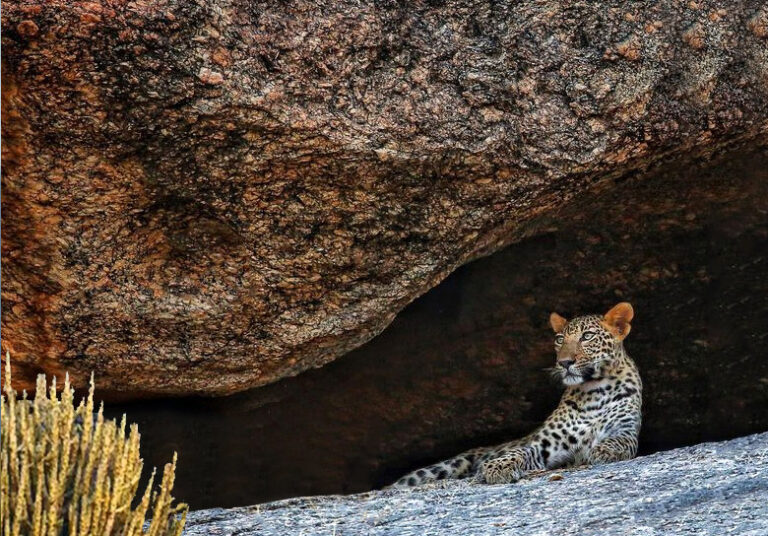
Jawai hosts an estimated 50–60 leopards — making it one of the highest leopard density zones in the world for a non-forested landscape. These aren’t reclusive jungle cats hiding in thick cover. These are bold, open-terrain leopards that rest on sunlit granite boulders, raise cubs in the shadow of ancient caves, and walk through village edges at dusk — completely undisturbed by human presence.

What makes Jawai globally unique: leopards here have co-existed with humans for centuries — with zero recorded conflict. The Rabari tribe considers them sacred. This is conservation without fences, tranquilisers, or conflict — just culture.


Jawai Leopard Safari – Complete Guide (2026)

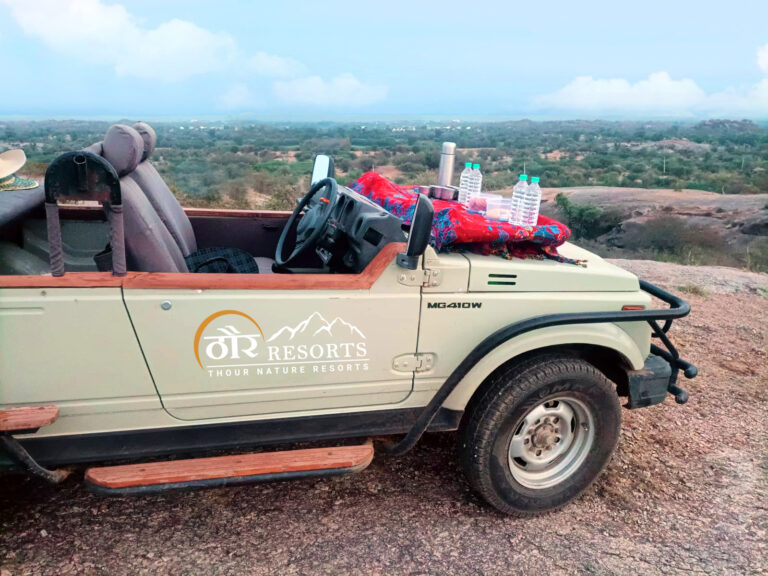
The Jawai leopard safari is the centrepiece of any visit to this region. Conducted in private open-top 4×4 jeeps with local expert trackers, the safari experience here is fundamentally different from tiger reserves. There are no government-mandated zones, no lottery permits, and no forest department escorts. Your tracker — who has likely grown up watching these specific leopards — takes you to where the cats are, based on fresh movement data tracked daily.

Leopard sighting rates at Jawai are exceptionally high. Most operators report 90–99% sighting success, owing to the open terrain and habituated cats. A typical safari lasts 2.5 to 3 hours.

Safari Timings (2026)

Safari Type Summer Timing Winter Timing Availability
Morning Safari 5:00 AM – 8:00 AM 6:00 AM – 9:00 AM Daily, Year-Round
Evening Safari 5:00 PM – 8:00 PM 4:00 PM – 7:00 PM Daily, Year-Round
Full Day Safari 6:00 AM – 6:00 PM 6:00 AM – 6:00 PM On Request
Night Safari Post Sunset Post Sunset Special Request Only

Pro Tip: Morning safaris give the highest sighting chances — leopards are actively hunting or returning from a night hunt. In winter, they bask on warm granite rocks through mid-morning.

Jawai Safari Zones — Where to Go

Unlike tiger reserves with fixed zones, Jawai safari operates across multiple village-edge territories. The main zones are:

  • Bera — The primary and most active safari zone. Highest leopard density. Most operators are based here.
  • Sena — Ideal for quieter, less-visited safaris. Known for leopard family sightings.
  • Kothar — Excellent morning zone. Dense granite hills, good for photography.
  • Jeewada — Lesser-known, great for private exclusive experiences.
  • Rughnathpura — Excellent for crocodile + leopard combo safaris near the river.
  • Varawal & Bisalpur — Secondary zones, often added for full-day safari routes.
  • Tela & Terua — Peripheral zones with lower footfall, good for rare species sightings.

Jawai Safari Booking & Price (2026)

Safari Type Price Range (Per Jeep) Capacity
Morning Safari ₹4,000 – ₹5,000  5 persons
Full Day Safari (12 hrs) ₹14,000 – ₹16,000 5 persons
Evening Safari ₹4,000 – ₹5,000 5 persons
Resort Package (2N/3D) ₹7,000 – ₹25,000+/couple Includes safari + stay + meals

Pro Tip: Book directly through your resort or a local Jawai-based operator for best prices. Sharing jeeps are not available — the entire jeep is yours.

Safari Tips for Maximum Leopard Sightings

  • Book morning safari — best leopard activity is between sunrise and 9 AM
  • Carry binoculars — leopards often rest on tall granite boulders 200–300m away
  • Wear muted, earthy colours — avoid bright colours that can alert wildlife
  • Stay silent during the safari — noise travels far on open terrain
  • Winter months (Nov–Feb) offer the best sightings — leopards sun themselves on rocks
  • Stay minimum 2 nights — first safari is orientation, second is where the magic happens
  • Ask your tracker about recent sightings — fresh pugmarks = active territory
  • Don’t rush — the best sightings happen when you stay still and wait

Wildlife & Fauna in Jawai – Complete Species Guide

Mammals

Animal Habitat Sighting Chances
Indian Leopard (Panthera pardus fusca) Granite hills & caves Very High (90–99%)
Sloth Bear Rocky scrubland Moderate
Caracal Open scrubland Rare
Striped Hyena Rocky ravines Moderate
Indian Wolf Grassland edges Low
Jungle Cat & Desert Cat Scrub & grassland Moderate
Blue Bull (Nilgai) Open terrain Very High
Chinkara (Indian Gazelle) Open scrubland High
Indian Jackal Village periphery High
Mugger Crocodile Jawai River & Dam High
Indian Sand Boa Rocky ground cover Occasional

Birds – 245+ Species (Birding Paradise)

The Jawai Dam and Jawai River wetlands attract over 245 resident and migratory bird species, making Jawai one of the finest birding destinations in Rajasthan. February is the peak month for migratory species.

  • Flamingos — Large seasonal flocks visible near the dam (October–February)
  • Indian Eagle Owl — Resident, frequently spotted on rock ledges at dusk
  • Demoiselle Crane — Thousands visit in winter, spectacular aerial formations
  • Red-naped Ibis — Resident species near the water body
  • Spot-billed Duck — Common near Jawai Bandh
  • Black-winged Stilt — Wading along the dam edges
  • Spotted Owlet — Active at dawn and dusk around village trees
  • Pelicans, Painted Storks, Grey Herons — Winter visitors to the dam
  • Bonelli’s Eagle, Short-toed Eagle — Regular raptors over the granite hills

Pro Tip: February is the single best month for birding at Jawai. Migratory species are at peak numbers and the cooler weather makes early morning watches extremely comfortable.


Jawai Dam Rajasthan – History, Significance & Visitor Guide

The Jawai Dam — known locally as Jawai Bandh — is the most iconic landmark in the region. Built across the Jawai River, a tributary of the Luni River, it was commissioned by Maharaja Umaid Singh of Jodhpur on 12 May 1946 and completed in 1957 by the Rajasthan Water Resources Department.

Standing 61.25 feet tall, Jawai Dam is the largest dam in western Rajasthan. The reservoir it creates is the ecological engine of the entire landscape — sustaining mugger crocodiles, flamingo flocks, migratory waterfowl, and the leopards that descend from the granite hills to drink at its edges at dusk.

Key Facts About Jawai Dam

Feature Detail
Local Name Jawai Bandh
River Jawai River (tributary of Luni River)
Commissioned By Maharaja Umaid Singh of Jodhpur
Construction Start 12 May 1946
Year Completed 1957
Height 61.25 feet
Distinction Largest dam in western Rajasthan
Wildlife Value Sustains crocodiles, flamingos, leopards, 245+ bird species
Entry Free (no safari ticket required to visit the dam viewpoint)

Why Visit Jawai Dam?

  • Free entry — no safari booking needed to visit the dam viewpoint
  • Mugger crocodiles visible year-round along the river banks — often within metres of the road
  • Flamingo flocks from October to February — hundreds to thousands visible at once
  • Sunset photography — golden light on the dam surface with Aravalli hills as backdrop
  • Leopards sometimes visible descending the hills towards the dam at dusk
  • Boat rides available at select points for closer bird and crocodile encounters

Best Time to Visit Jawai Bandh – Month-by-Month Guide

Month Temperature Leopard Activity Bird Watching Overall Rating
October 25–32°C High Good ⭐⭐⭐⭐
November 18–28°C Very High Very Good ⭐⭐⭐⭐⭐
December 10–22°C Very High Excellent ⭐⭐⭐⭐⭐
January 8–20°C Very High Excellent ⭐⭐⭐⭐⭐
February 12–25°C High BEST (Peak) ⭐⭐⭐⭐⭐
March 18–30°C Moderate–High Good ⭐⭐⭐⭐
April 28–36°C Moderate Fair ⭐⭐⭐
May–June 35–42°C Low (Night Only) Poor ⭐⭐
July–Sept Monsoon 25–35°C Low Moderate ⭐⭐

Best overall window: November to February. Leopards are most active during sunny winter days, birdlife is at peak, temperatures are ideal for open-jeep safaris.

Best for birding only: February. Flamingos, demoiselle cranes, and pelicans are at maximum numbers.

Budget travellers: April and early May still offer good sightings at lower resort prices.


The Rabari Tribe & Leopards – Rajasthan’s Most Extraordinary Story

In most wildlife corridors across India, a leopard taking livestock means one thing: retaliation. At Jawai, the story is different — and it may be the most extraordinary wildlife-human story in all of Asia.

The Rabari tribe are a semi-nomadic pastoral community who have grazed their goats, sheep, and camels across the Aravalli landscape for centuries. When a leopard takes one of their animals — and it does, regularly — they do not pursue, retaliate, or report. They accept it. Not reluctantly. Willingly.

The Rabari believe that leopards are manifestations of Mata Chamunda, their guardian goddess. A leopard taking livestock is not a loss — it is an offering. This spiritual worldview has created something wildlife scientists call a “conflict-free coexistence zone” — a landscape where apex predators and humans share territory without a single recorded fatality on either side.

Tourism revenue has reinforced this relationship. Today, many Rabari families benefit directly from Jawai’s growing safari economy — through employment as trackers, guides, cooks, and homestay hosts. The leopards that once threatened their livelihood now sustain it.

Wildlife researchers from across the world study Jawai as a model for community-based conservation. In a country where human-leopard conflict kills dozens of people and cats every year, Jawai stands as proof that culture can succeed where fences and cameras cannot.

The Jawai Temples – 300 Sacred Shrines in the Hills

The granite hills of Jawai are dotted with nearly 300 temples and shrines, many centuries old. Every rock formation, cave, and hilltop has spiritual significance. Daily aartis are performed at hillside temples visible from the safari routes.


How to Reach Jawai National Park – Complete Travel Guide

By Air

The nearest airport is Udaipur (Maharana Pratap Airport), approximately 150 km from Jawai (~2.5 hrs). Other options: Jodhpur Airport (~140 km), Jaipur (~340 km), Ahmedabad (~280 km).

By Rail

Mori Bera Railway Station, just 4 km from the Jawai reserve, is the closest railhead — directly accessible from Mumbai, Delhi, Jaipur, Udaipur, and Ahmedabad. Most resorts offer free pickup from the station.

By Road

Jawai is connected via National Highways 27, 58, and 62. Self-drive is easy — NH27 passes directly through the region.

From Distance Road Time Rail Option
Udaipur ~150 km ~2.5 hrs Yes (Mori Bera)
Jodhpur ~140 km ~2.5 hrs Yes (Mori Bera)
Jaipur ~340 km ~5 hrs Yes (Mori Bera)
Ahmedabad ~280 km ~4.5 hrs Yes (Mori Bera)
Mumbai ~700 km ~12 hrs Yes (Mori Bera)
Delhi ~600 km ~9–10 hrs Yes (Mori Bera)

Things to Do in Jawai – Beyond the Leopard Safari

  • Leopard Safari (Morning & Evening) — Core experience. Book a private jeep with a local tracker.
  • Bird Watching at Jawai Dam — Pre-dawn walks for flamingos, cranes, and eagles
  • Crocodile Safari on Jawai River — Boat ride or riverside drive for mugger crocodile sightings
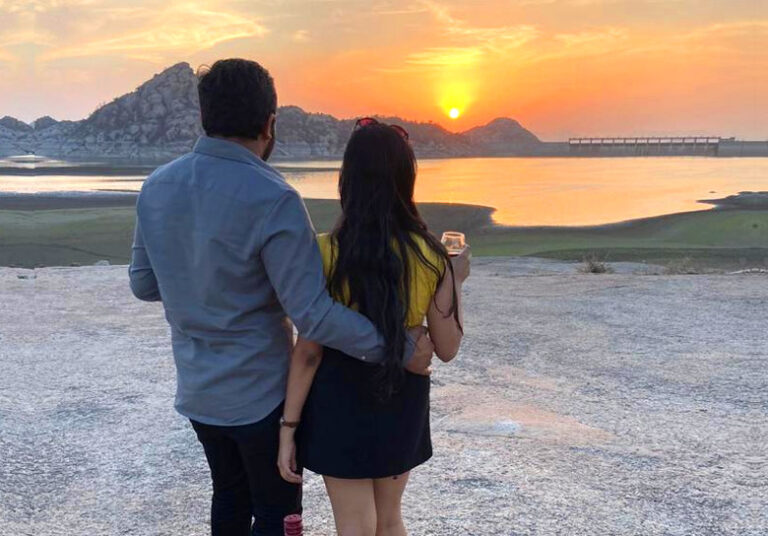
  • Sunset at Granite Hills — Watch the Aravalli sky turn orange from a hilltop viewpoint
  • Temple Trail — Visit ancient rock-carved hillside temples and attend evening aarti
  • Rabari Village Walk — Walk through working pastoral villages, meet the Rabari community
  • Trekking the Granite Hills — Guided morning hikes through the boulder landscape
  • Astrophotography — Minimal light pollution makes Jawai one of Rajasthan’s best stargazing spots
  • Jawai Dam Boat Ride — Early morning ride for bird and crocodile encounters
  • Outdoor Yoga — Open-air sessions with the hills as your backdrop
  • Hi-Tea & Themed Dining in Nature — Many resorts offer sunset hi-tea on hilltops
  • Horse Safari on Marwari Horses — Offered by select luxury resorts

Jawai vs Ranthambore – Which is Better for Wildlife?

Factor Jawai Leopard Reserve Ranthambore Tiger Reserve
Primary Big Cat Leopard (50–60 individuals) Tiger (~70 tigers)
Terrain Open granite hills & scrubland Dense forest & lake edges
Sighting Rate 90–99% (leopard) 40–60% (tiger)
Crowds Low–Moderate Very High
Safari Type Private, unregulated, flexible Government-controlled zones
Permit System No government permit needed Strict zone allocation + online permits
Cultural Experience Exceptional (Rabari tribe, 300 temples) Limited
Cost Moderate High
Night Safari Available (on request) Not permitted
Best For Intimate wildlife + culture Tiger photography

Verdict: If you want a tiger, go to Ranthambore. If you want a richer, more personal, less commercialised wildlife experience — Jawai wins every time.


Where to Stay in Jawai – Resort Guide

Category What to Expect Price Range (Per Couple/Night)
Ultra Luxury Private villas, plunge pools, personal naturalist, fine dining ₹25,000 – ₹60,000+
Luxury Safari tents/cottages, all meals, 1–2 private safaris per day ₹11,000 – ₹25,000
Mid-Range Comfortable rooms/tents, all meals, safari coordination ₹7,000 – ₹11,000
Budget Clean rooms, basic meals, safari booking assistance ₹2,000 – ₹7,000

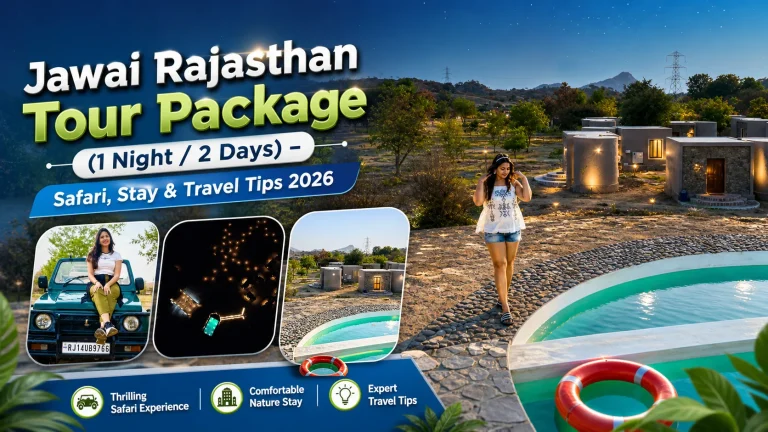
Pro Tip: Stay at least 2 nights in Jawai for the best experience. Most resorts, including Thour Nature Resorts – Resort in Jawai Bandh, Rajasthan, can arrange morning and evening leopard safaris directly from the property, making it easier to explore the region with experienced local trackers.


Frequently Asked Questions

Q: What is Jawai National Park famous for?

Jawai is famous for having one of the highest leopard densities in the world in a non-forested landscape, with 50–60 wild leopards living alongside humans in complete harmony. The Rabari tribe’s sacred relationship with leopards has resulted in zero man-animal conflict — a globally unique phenomenon. Jawai Dam (the largest dam in western Rajasthan), 245+ bird species, and ancient hilltop temples add to its appeal.

Q: What is the best time to visit Jawai Bandh?

October to March is the best time. November to February is peak season — leopards are highly active during sunny winter days and migratory birds are at peak numbers. February is ideal specifically for bird watching.

Q: How many leopards are in Jawai?

An estimated 50–60 individual leopards — one of the densest populations in India relative to its area.

Q: What is the Jawai leopard safari price in 2026?

A private jeep safari costs ₹4,000 to ₹5,000. Full-day safaris ₹14,000 to ₹16,000. Resort packages from ₹7,000/couple/night. No government entry fee.

Q: Is Jawai safe to visit?

Yes — zero recorded man-animal conflict in history. Safaris are in private 4×4 jeeps with expert local guides.

Q: What is Jawai Dam and why is it important?

Built between 1946–1957 by Maharaja Umaid Singh of Jodhpur. At 61.25 feet, it is the largest dam in western Rajasthan. It sustains crocodiles, flamingos, 245+ bird species, and the leopards that descend to drink at dusk.

Q: Can I do a night safari at Jawai?

Yes, on special request — book in advance through your resort. Restricted by the Rabari community to avoid wildlife disturbance.

Q: What are the main safari zones in Jawai?

Bera (main), Sena, Kothar, Jeewada, Rughnathpura, Varawal, Bisalpur, Tela, and Terua. Your tracker directs you based on fresh daily leopard movement data.

Q: How far is Jawai from Udaipur and Jodhpur?

~150 km from Udaipur and ~140 km from Jodhpur — both ~2.5 hrs by road. Mori Bera Station is just 4 km from the reserve.

Q: What makes Jawai different from other wildlife sanctuaries in India?

Open granite terrain (not dense jungle), zero man-animal conflict due to Rabari culture, and no government permit system — making safaris private, flexible, and guided by trackers with generational knowledge.

Q: Is Jawai better than Ranthambore?

For leopard sightings, cultural depth, and intimate experience — yes. 90–99% sighting rate vs Ranthambore’s ~40–60% tiger odds. No permit queues, no overcrowding.


Why Jawai Should Be on Every Wildlife Traveller’s List

Jawai Leopard Conservation Reserve is not a destination you visit because it’s on a list. You visit because there is genuinely nowhere else like it on Earth.

Where else can you watch a wild leopard stretch herself on a sunlit boulder at dawn, then drive five minutes to a Rabari shepherd who tells you, with complete calm, that the same leopard passed through his flock last night? And smiles. Not in fear. In pride.

Jawai is proof that wildlife conservation doesn’t always need fences, cameras, or government schemes. Sometimes it just needs a community that decides, generations ago, that the animals around them are sacred — and never wavers from that belief.

Plan your Jawai visit between October and February. Stay minimum 2 nights, book a morning safari on both days, and ask your tracker for fresh pugmarks before you leave the camp.

Thour Nature Resorts

Thour Nature Resorts

Thour Nature resorts is one of the best vantage point located in the midst of granite hills of Jawai. One would surely love and find great fun in exploring this place. The picturesque and mesmerizing services of Thour Nature resorts aid onto the bliss of this place. One would surely love discovering more and more about this place. Thus, it is a destination which would excite every stranger.