 +91-9784559999
 info@thournatureresorts.com
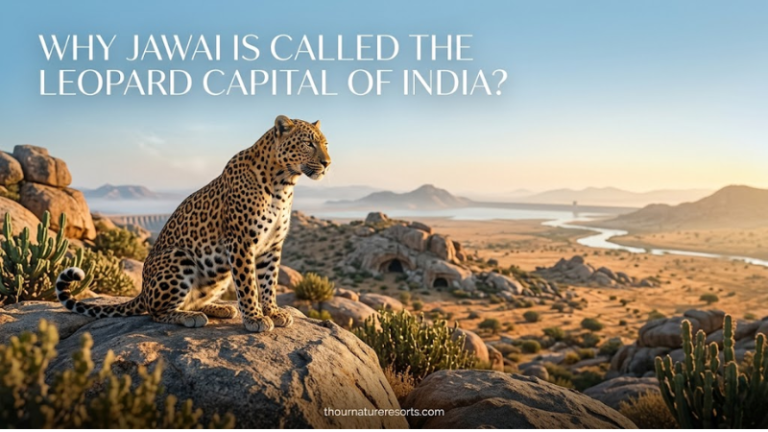
Jawai sits in Rajasthan’s Pali district, centered on Jawai Dam near the towns of Sumerpur and Bali, roughly 150 km from Udaipur and 170 km from Jodhpur. Most wildlife photography destinations fight you for a clean shot, thick canopy, animals that vanish into shadow the second they sense a lens. Jawai does the opposite. Bare granite hills mean leopards are frequently visible at genuinely close range, often resting in full daylight on open rock with nothing between you and the frame. That’s a rare gift for a photographer, and it changes what gear and settings actually matter here compared to a dense-forest safari.
Here’s what to bring and how to shoot it.
There’s a particular quiet that happens on a Jawai morning right before a sighting; the jeep engine cuts, your guide points without a word, and there it is: a leopard stretched out on a boulder forty metres off, backlit by a sun still low enough to turn the granite orange. No branches in the way, no scramble to reposition. Just enough time to breathe, check your settings, and shoot. That’s the moment this guide is built around.
Why Jawai Works Differently for Photographers
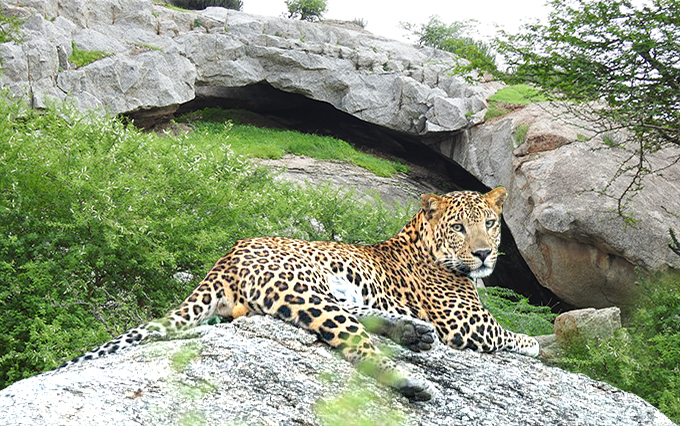
Two things make this landscape distinct. First, the terrain: open granite boulders and ridgelines instead of tree cover mean leopards, hyenas, and the other wildlife found across Jawai are visible at distances and angles you rarely get elsewhere in India. Second, the light: that same bare granite reflects and intensifies both morning and evening sun in a way forest terrain doesn’t, which is a gift for golden-hour shots and a real challenge for exposure if you’re not ready for it.
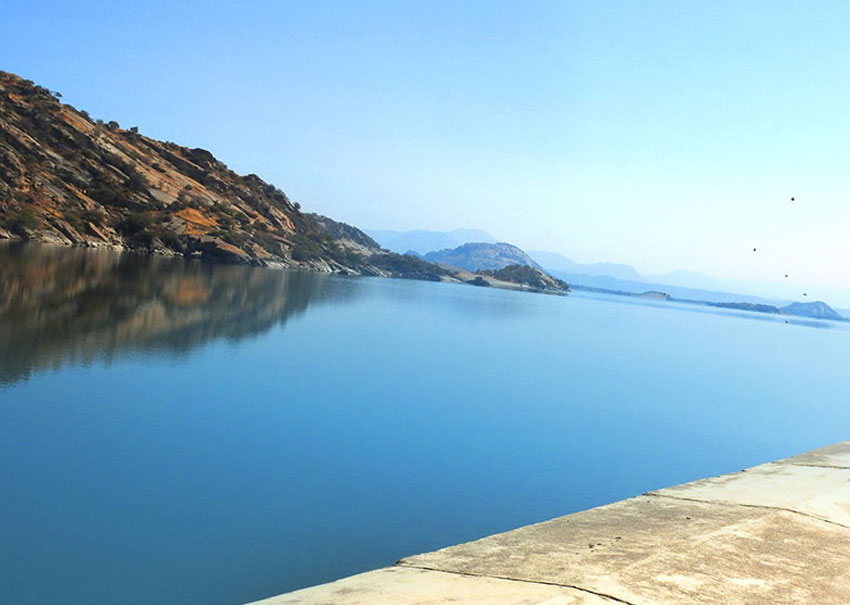
Add in the dam itself; a wide, still water surface that pulls in migratory birdlife through winter and you’ve got three genuinely different kinds of shots available in a single stay: tight wildlife portraits, sweeping granite landscapes, and birdlife over water.
Lens Recommendations
You don’t need the 500–600mm glass that dense-forest reserves demand. A 70–200mm covers most close-range leopard encounters comfortably, and a 100–400mm zoom gives you the flexibility to go tighter when a leopard is resting further up a ridge. If birdlife at the dam is a priority, pack something reaching 400mm or beyond; birds keep more distance than the leopards typically do.
A fast aperture (f/2.8–f/4) is worth prioritizing over raw focal length if you’re choosing between lenses, since it earns you real advantages in the low-light windows both safari sessions run in. Guides here often notice first-time visitors show up with the same 600mm setup they’d pack for Ranthambore or Bandhavgarh and then spend the first safari re-learning the range, backing off zoom because the leopard is simply closer than that lens is built for.
Camera Body & Low-Light Settings
Morning and evening safaris are the only sessions Jawai’s safaris run; both happen in genuinely low light for a meaningful stretch of the drive. A camera body with strong high-ISO performance matters more here than resolution. Practical settings to start from:
- Mode: Aperture priority, wide open (f/2.8–f/5.6 depending on your lens) to maximize light intake.
- ISO: Set auto-ISO with a ceiling around 3200–6400 depending on your body’s noise handling; don’t be afraid to push it in the first and last twenty minutes of a safari window.
- Shutter speed: Keep a minimum of 1/500s for a moving leopard, and you can drop to 1/250s for a resting animal on rock.
- Drive mode: Continuous/burst shooting – sightings here are often sudden, and you want frames from the whole sequence, not one guess.
- Flash: Leave it off entirely. It’s disruptive to wildlife and prohibited on most safaris here for exactly that reason.
For the granite itself, watch your exposure carefully at midday and golden hour. Light rock reflects intensely and will blow out highlights if you’re not dialing in negative exposure compensation (start around -0.3 to -0.7 EV and adjust from there). It’s an easy mistake to make once and never again: check your first few frames on the back of the camera early in a safari, not after the sighting has already moved on.
Field Setup
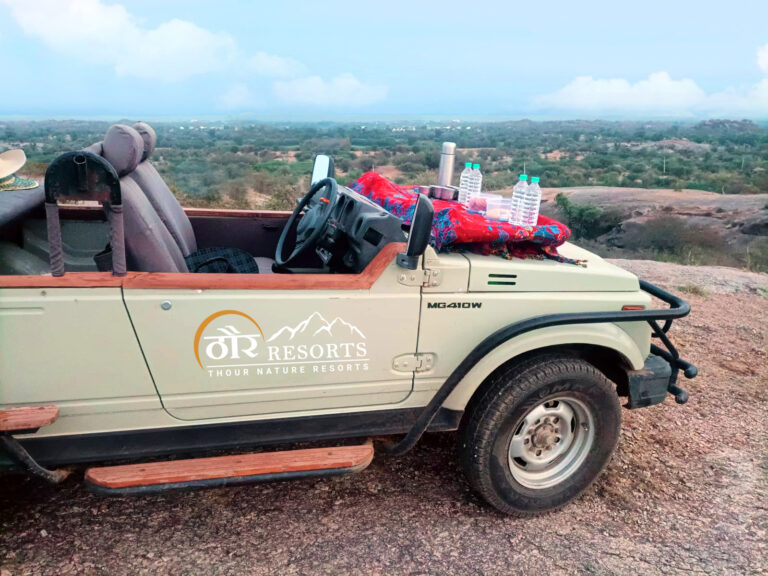
A beanbag or window mount works better than a tripod for jeep-based shooting; you won’t have room or stability for a full tripod setup, and a beanbag rests directly on the jeep’s frame for a steadier base than handholding alone. Jawai’s jeep trails run over uneven rock, not flat dirt track, so anything you can brace against the vehicle frame will save you more sharp frames than an extra stop of light ever will. If you’re shooting the dam itself from a fixed vantage point outside safari hours, that’s where a proper tripod and even a graduated ND filter earn their place, since you’re working with a still, wide landscape rather than a moving subject and the light off the water at dusk, with birds lifting off in silhouette, is worth the extra setup time.
What You’ll Actually Be Shooting
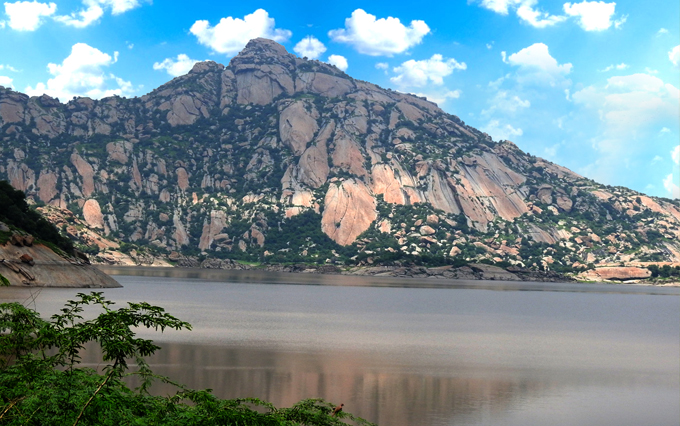
- Leopards resting or moving across open granite, often at close enough range that a shorter zoom outperforms a longer one.
- Migratory birdlife at the dam through winter, best photographed with patience from a fixed position rather than a moving jeep — if birds are your main subject, our guide to bird watching at Jawai Bandh covers the season and species in more detail.
- Mugger crocodiles basking along the shoreline, approach this shot with your longest reach rather than proximity.
- Landscape and golden-hour shots of the granite hills and dam, which stand on their own even on a slow wildlife day.
A Note on the Rabari Community
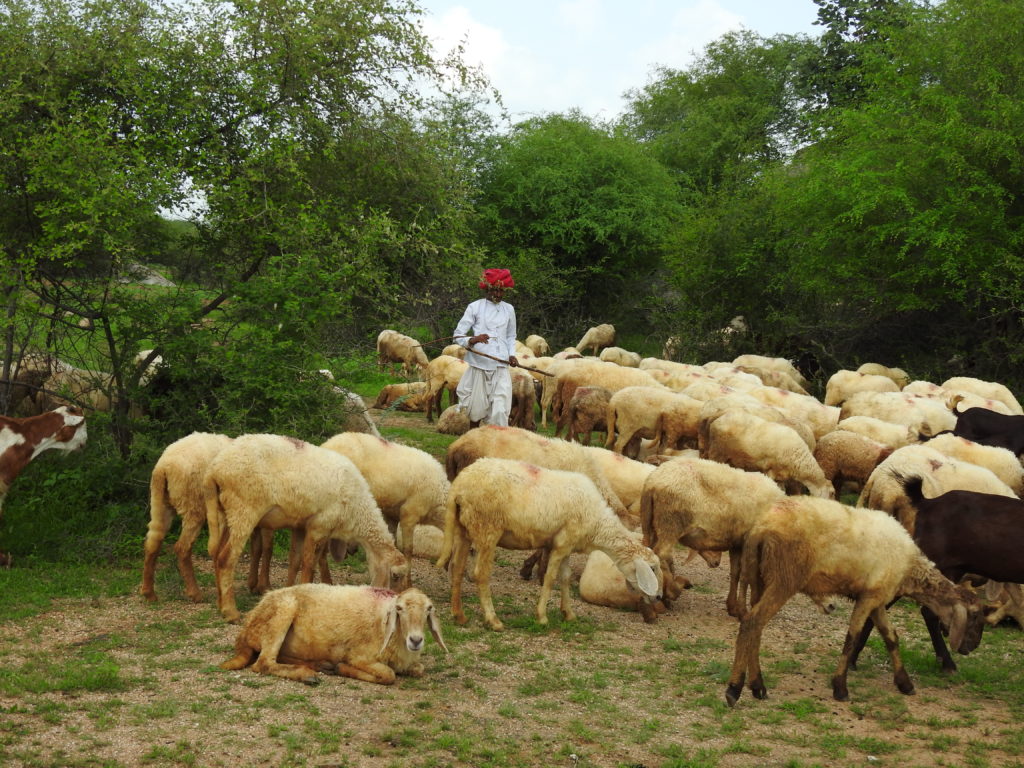
If your safari or stay includes contact with local Rabari herders, treat photographing them the way you would any stranger’s home; ask first, and be genuinely open to a “no.” Their coexistence with Jawai’s leopards is a real, lived tradition rooted in spiritual belief, not a performance staged for visiting cameras, and it’s worth approaching with that respect rather than as one more subject on a shot list.
Realistic Expectations
Jawai’s open terrain gives photographers genuinely strong odds; sightings here are consistently among the best of any leopard destination in India. But these are wild animals on their own schedule, and no honest guide will promise a guaranteed frame. What you can count on is a landscape built for photography even on the mornings the leopard doesn’t show: granite lit gold at sunrise, a hyena’s fresh tracks crossing the trail, birdlife lifting off the dam at dusk. More than one guest has come back from a “quiet” safari with a card full of usable frames and no leopard in a single one of them and called it one of the best mornings of the trip anyway.
Photographing With Thour Nature Resorts Jawai
Our guides know this terrain by season and by light, where the morning sun hits the ridgelines first, which stretch of shoreline the crocodiles favor this time of year, when the birds are most active at the dam. Ask any of them and they’ll tell you which boulder a particular leopard has favored for weeks, or point out the exact ridge where last winter’s best golden-hour shot came together. Safaris run in small groups so there’s actual room to move a camera, and our team can help plan your safari timing around the light you’re chasing rather than just the wildlife. You can book a leopard safari online and tell us in advance that you’re shooting — it changes which drive slot we’d put you in.
Ready to bring your camera to Jawai? Stay at Thour Nature Resorts Jawai, our Jawai resort sits close enough to the hills that your pre-dawn drive is short and you’re in position while the light is still worth shooting.
Frequently Asked Questions
What’s the best lens for a Jawai leopard safari?
A 70–200mm or 100–400mm zoom covers most situations well, since Jawai’s open terrain puts leopards at closer range than typical forest safaris require. A longer lens (400mm+) is more useful for birdlife at the dam.
What camera settings work best for Jawai’s low light?
Aperture priority mode, a wide-open aperture (f/2.8–f/5.6), auto-ISO up to 3200–6400, a minimum shutter speed of 1/500s for moving animals, and continuous burst shooting to catch fast sequences.
Can I use flash photography on a Jawai safari?
No- flash is discouraged and typically prohibited, since it disturbs wildlife. Plan your settings around available light instead.
When is the best light for photography in Jawai?
Early morning and late afternoon safari windows offer the strongest golden-hour light on the granite hills, alongside the best wildlife activity.
Does Jawai offer night safaris for photography?
Standard safaris run at dawn and dusk. If night safaris are of interest, confirm directly with your resort, since offerings vary and aren’t standard across all operators.