 +91-9784559999
 info@thournatureresorts.com
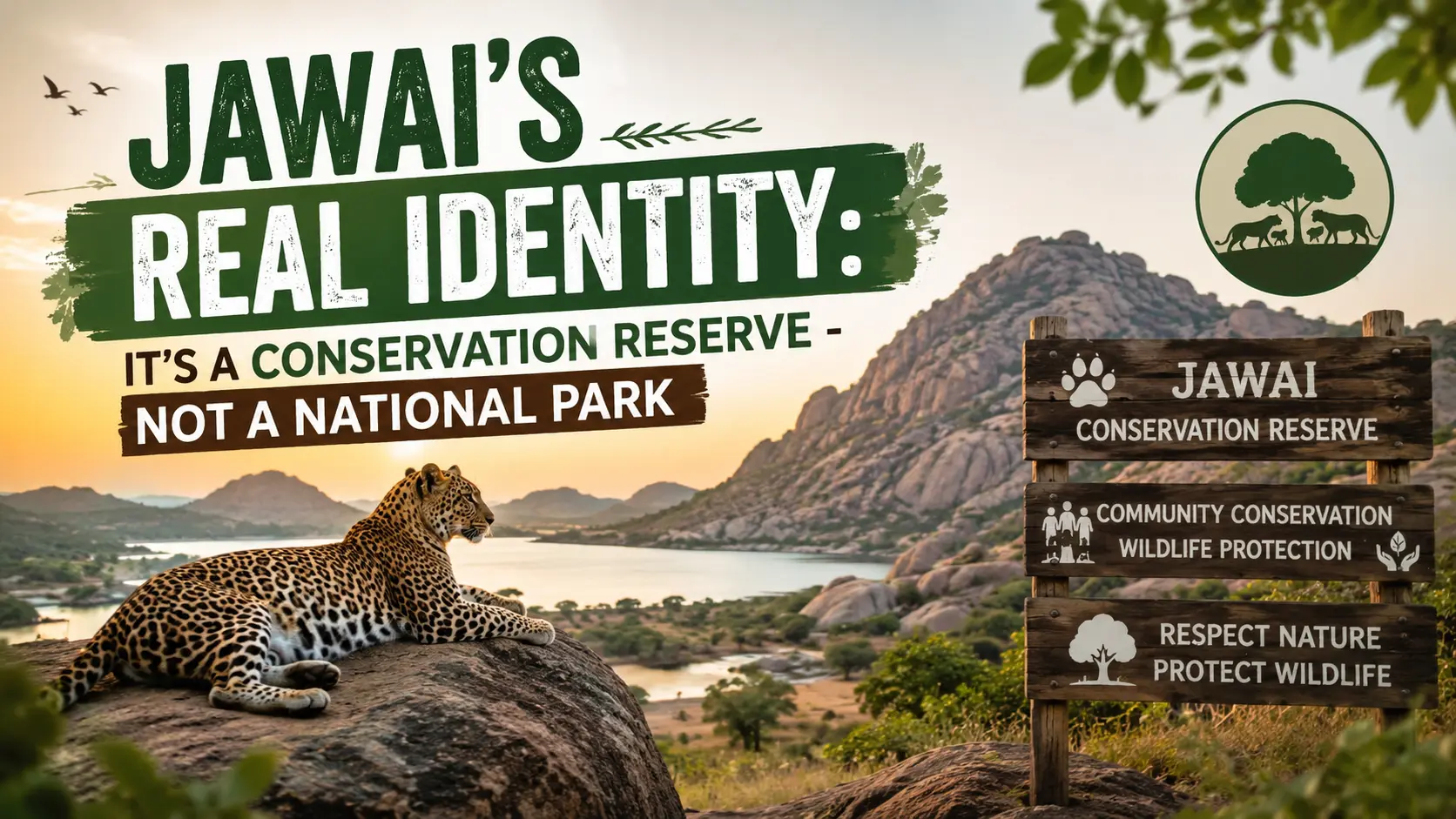
No. Jawai has never been a national park; it’s a Conservation Reserve, a different legal category entirely. If you’ve searched for Jawai online, you’ve probably seen it called “Jawai National Park” more than once. It’s a common mistake, repeated across travel blogs and even some resort websites — and it’s worth correcting clearly, because the real designation is more interesting, not less.
In this guide
Jawai Is Not a National Park — Here’s Its Real Status
Jawai has no forest-department-run gates, no fixed safari zones, and no government booking portal — all things a national park would have. What it actually is: the Jawai Bandh Leopard Conservation Reserve, formally notified by the Rajasthan Forest Department on 23 February 2010, under the Wild Life (Protection) Act, 1972 — a legally distinct category from a national park or wildlife sanctuary. A second notification on 15 June 2018 expanded the boundary to include additional villages.
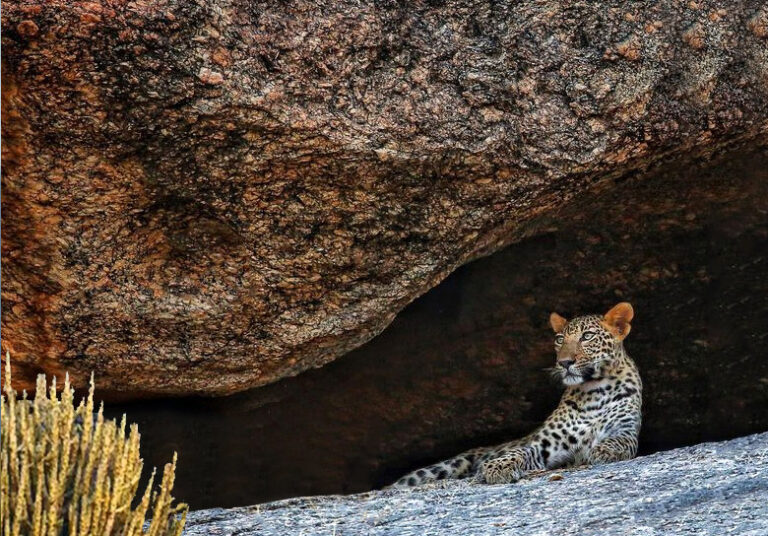
That distinction isn’t a technicality. A Conservation Reserve allows for exactly the kind of landscape Jawai has become known for: leopards denning in caves on private and village land, safaris run through community-based tracking rather than a ticketed forest-department system, and a level of access and flexibility a fenced national park simply couldn’t offer.
Here’s how the three designations differ:
| Designation | Legal Basis | Access Model | Example |
|---|---|---|---|
| National Park | Wild Life (Protection) Act, Section 35 | Fixed gates, permits, forest-department-run | Ranthambore |
| Wildlife Sanctuary | Wild Life (Protection) Act, Section 26A | Regulated, limited human activity | Kumbhalgarh |
| Conservation Reserve | Wild Life (Protection) Act, Section 36A | Community/private land, no fenced boundary | Jawai |
Where Is Jawai, Exactly?
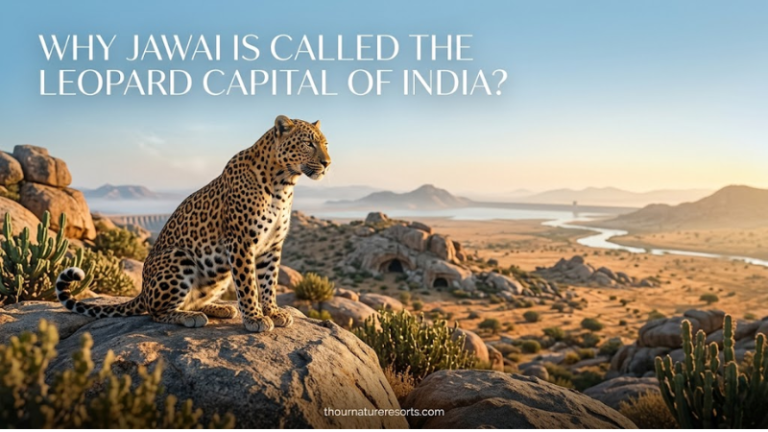
Jawai sits in the Sumerpur tehsil of Pali district, Rajasthan, roughly midway between Udaipur (~150 km) and Jodhpur (~140–170 km, depending on route). The core notified reserve covers 19.79 sq. km around Jawai Dam, with the wider community-safari landscape extending further into surrounding villages.
- By air: Udaipur (Maharana Pratap Airport, ~150 km) and Jodhpur (~140–180 km) are the nearest options.
- By rail: Mori Bera station (~4 km) and Jawai Bandh station (~5 km) are the closest; Falna (~30 km) offers wider connectivity.
- By road: Well connected via national highway from Udaipur, Jodhpur, Mount Abu, Ahmedabad, and Jaipur.
Our full guide on how to reach Jawai Bandh by road, train, and flight breaks down routes and timings in detail.
Meet the Leopards Who Never Learned to Hide
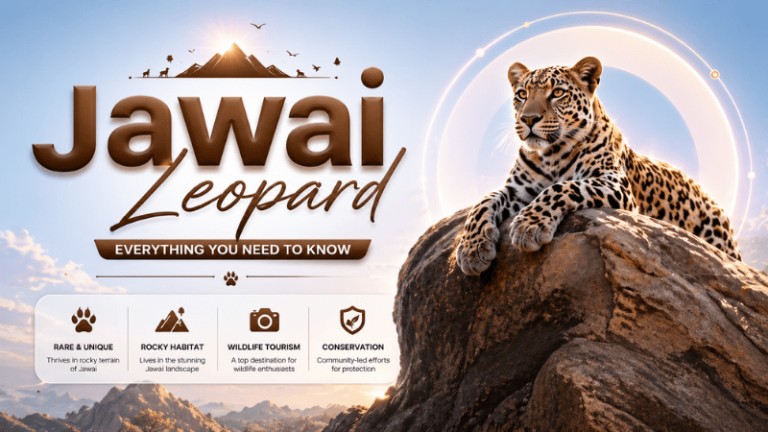
Panthera pardus fusca, the Indian leopard, is listed as Vulnerable on the IUCN Red List — a genuine conservation concern, though not on the brink of extinction, as some sources overstate. Current population estimates for the reserve range from roughly 50 to 70 individuals depending on the survey cited, among the highest densities of leopards living outside dense forest anywhere in the world, sheltering in granite caves rather than tree cover.
What makes this population’s story remarkable isn’t a claim of zero conflict — livestock predation does happen here, as it does anywhere leopards and grazing communities share land. What’s genuinely rare is how it’s handled: the Rabari community, semi-nomadic pastoralists who’ve herded goats, sheep, and camels across these hills for generations, largely absorb these losses rather than retaliate, rooted in a belief system that regards leopards as sacred rather than as threats. That’s a long-standing, well-documented pattern of low conflict — a meaningfully different claim than an absolute “never happened,” which isn’t something any wildlife population can honestly guarantee.
The Dam That Built an Entire Ecosystem by Accident
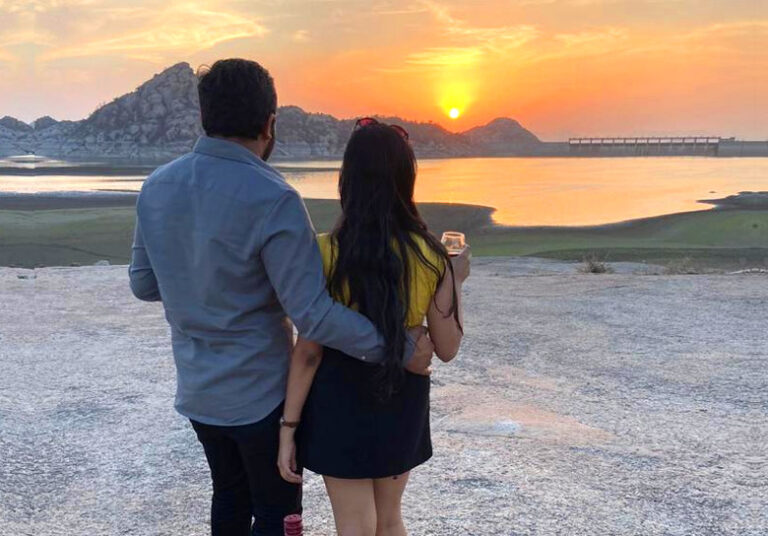
Jawai Dam — locally called Jawai Bandh — was built across the Jawai River, a tributary of the Luni, under Maharaja Umaid Singh of Jodhpur. Construction began on 12 May 1946 and was completed in 1957. Standing 61.25 feet tall with a capacity of 7,887.5 million cubic feet, it’s the largest dam in western Rajasthan, irrigating a command area of roughly 102,315 acres across Pali and Jalore districts. Its own reservoir surface is considerably smaller, at around 13 sq. km — the two figures measure different things and are often confused in other write-ups.
The reservoir supports mugger crocodiles, a strong winter population of migratory birds including flamingos, demoiselle cranes, and pelicans, and draws leopards down from the hills at dusk to drink.
It’s Not Just Leopards — Who Else Calls Jawai Home
Beyond leopards, the reserve and surrounding landscape support striped hyenas, jungle cats, sloth bears, nilgai, chinkara, mugger crocodiles, Bengal foxes, Indian eagle-owls, and a range of reptiles including Indian rock pythons and red sand boas — our guide to the animals found in Jawai covers each in detail.
Winter transforms the dam into a genuine birding destination, though we’d avoid quoting an exact species count; figures circulating online for Jawai range anywhere from “100+” to “245+,” and none are consistently sourced.
What a Jawai Safari Actually Feels Like
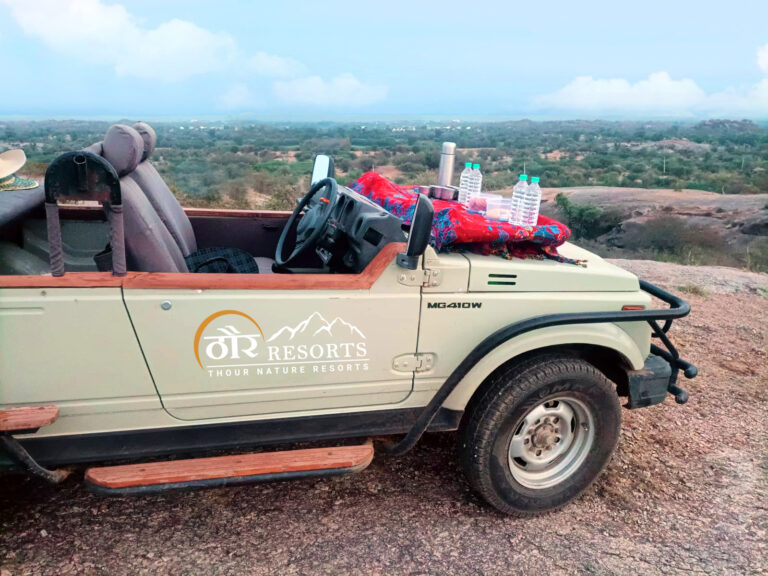
Safaris run in open jeeps at dawn and dusk, led by local trackers — many from Rabari families — who follow fresh movement signs daily rather than working from fixed zones. Sighting odds here are genuinely among the best in India for wild leopards, though no honest operator should promise a guaranteed sighting or quote a precise percentage like “90–99%.” Leopard behaviour doesn’t work that predictably, even in strong habitat.
The jeep leaves before the sky does; cold air, dark trails, your tracker scanning ridgelines out of habit. Then the radio crackles, the driver turns without a word, and you know something’s ahead.
You round a rock face and there it is — a leopard stretched across a sunlit boulder, entirely unbothered by you. No one moves. No flash, just one careful shutter click. It watches the valley for a while, then slips into a crevice and disappears.
Not every drive ends this way. Some turn up only tracks, a hyena’s silhouette, goats crossing the trail at sunset. That’s still Jawai. The same open terrain that makes sightings this vivid also means they’re never guaranteed on a single drive — which is why most visitors plan for more than one.
When to Go — And What You’ll Trade Off If You Don’t
October to March is the most comfortable window, with peak migratory birdlife typically in December–February. April to June is hot, but leopards are drawn closer to water sources, which can improve sighting odds for visitors prepared for the heat. July to September brings monsoon greenery and quieter safaris, though sightings can be less predictable.
More Than a Safari: What Else Fills the Days Here
Jawai offers more than leopard drives: birdwatching at the dam, respectful Rabari village visits arranged through your resort, hilltop temple visits, stargazing under some of Rajasthan’s darkest skies, and crocodile spotting along the reservoir edge. Our roundup of things to do in Jawai and Bera has the full list.
Where to Rest Between Sightings
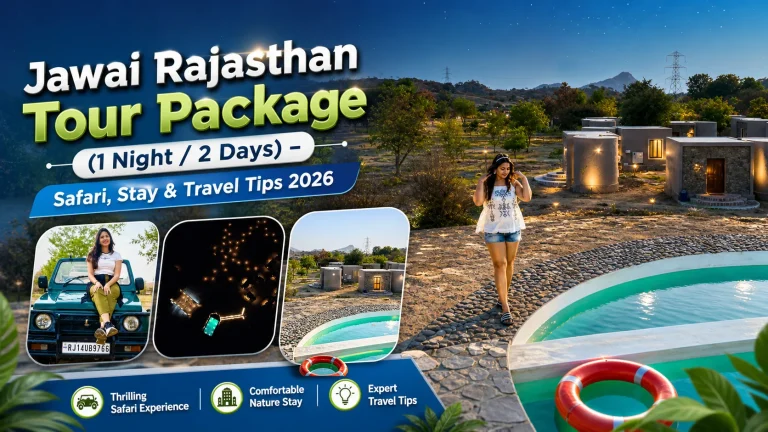
Thour Nature Resorts Jawai sits within the Jawai landscape, offering direct access to safari zones alongside full resort comfort; Luxury Tents, Cottages, and Spacious Cottages suited to solo travelers, couples, and families alike. It is the best resort in Jawai to stay, offering a luxurious stay and comfort, a hill-top pool, and delicious food prepared with organic vegetables grown on our in-house farm.
The Questions Everyone Asks Before Booking
Is Jawai a national park?
No. Jawai is the Jawai Bandh Leopard Conservation Reserve, notified in 2010 under the Wild Life (Protection) Act, 1972 — a different legal category from a national park or sanctuary, with no forest-department-run gates or fixed zones.
How many leopards live in Jawai?
Estimates range from roughly 50 to 70 individuals depending on the survey, among the highest densities of leopards living outside dense forest anywhere in the world.
Has there ever been a leopard attack in Jawai?
Jawai has a long-standing record of low human-leopard conflict, rooted in Rabari cultural tolerance and the open terrain that makes leopards more visible. This is a strong record, not an absolute guarantee — leopards remain wild predators.
When was Jawai Dam built?
Construction began on 12 May 1946 under Maharaja Umaid Singh of Jodhpur and was completed in 1957.
What’s the best time to visit Jawai?
October to March offers the most comfortable safari conditions and the best birdwatching, typically peaking December through February.