 +91-9784559999
 info@thournatureresorts.com
Quick Summary
- Where: Pali district, Rajasthan, on the Aravalli edge, roughly midway between Udaipur (about 150 km) and Jodhpur (about 170 to 180 km).
- What makes it different: granite hills and caves instead of jungle, no fencing, and leopards living alongside Rabari herding villages.
- Best time: October to March for comfortable weather and migratory birds. April to June is hot but brings leopards closer to water.
- Safari: open 4×4 gypsies, roughly 2 to 3 hours, in seasonal morning and evening slots.
- Sightings: odds are much better than at a typical park, but no sighting is guaranteed.
- Where to stay: Thour Nature Resorts Jawai, close to the hills and the safari zones.
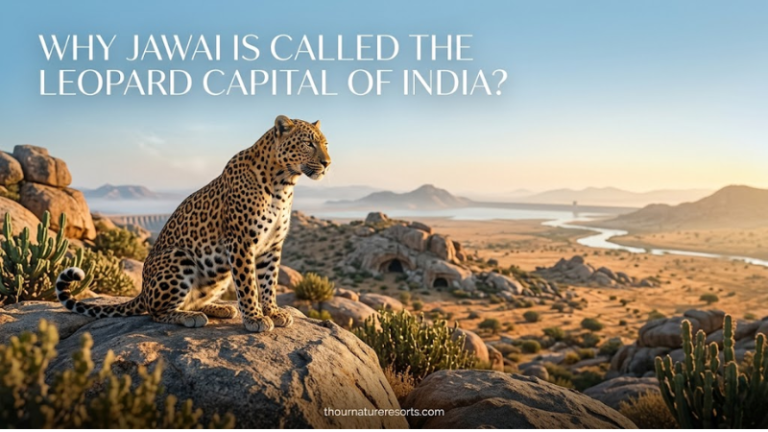
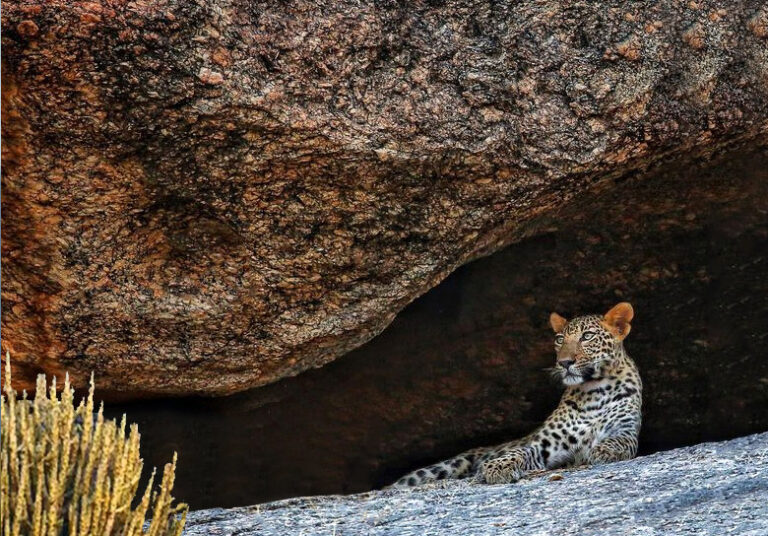
The granite hills around Jawai don’t look like leopard country at first; no dense canopy, no cover to speak of, just bare rock holding the day’s heat long after the sun drops. That’s exactly why the leopards are so visible here: they den in caves cut into these hills and move across open rock at dawn and dusk, often in full view of the villages below. Tucked into Rajasthan’s Pali district, Jawai has earned its reputation as the country’s densest leopard landscape outside a forest. This guide covers what you actually need to plan the trip: location, timings, what to expect, and where to stay.
Where Is Jawai Located?
Jawai sits in Rajasthan’s Pali district, on the edge of the Aravalli Range among the oldest mountain systems on Earth roughly midway between Udaipur and Jodhpur. Jawai Dam, built between 1956 and 1957 on the Jawai River (a tributary of the Luni), is the largest dam in western Rajasthan and anchors the landscape: granite outcrops, scrub forest, and cave systems that together form the Jawai Bandh Leopard Conservation Reserve, formally notified by the Rajasthan Forest Department in February 2010 to protect the region’s cave-dwelling leopards. That official status matters, but it’s worth being precise about what it means: Jawai isn’t a fenced national park or a traditional wildlife sanctuary. It’s a conservation reserve, a lighter, more open designation where leopards live alongside working villages, which is what makes the safari experience here so different from anywhere else in India.
How to Reach Jawai
By air: The nearest airports are Udaipur (roughly 150 km) and Jodhpur (roughly 170–180 km), both a straightforward cab ride from Jawai. By train: Mori Bera station is the closest to the reserve, at roughly 4-5 km. Jawai Bandh station (JWB) has wider express-train connectivity to Jaipur, Ahmedabad, and Delhi but sits farther out to confirm exact distance to your specific stay before booking a taxi. Falna, the largest of the three stations, is about 30-35 km away. By road: Jawai is well connected by highway from Udaipur, Jodhpur, Mount Abu, and Ahmedabad, making it an easy add-on to a Rajasthan road trip.
Why the Jawai Leopards Are Unique
Human and Leopard Coexistence
The Rabari, a semi-nomadic pastoral community who have herded goats, sheep, and camels across these hills for generations, share this land with the leopards as a matter of belief, not truce. Many Rabari are devotees of Shiva, traditionally depicted wearing a leopard skin, and regard the leopards as sacred, protective figures. Livestock loss to leopards does happen, it’s simply tolerated rather than met with retaliation, rooted in that spiritual framework rather than in any actual absence of predation. It’s a genuinely rare low-conflict dynamic for a big-cat population this dense. Rabari herders are often the sharpest trackers in the region, reading pug marks and alarm calls with a fluency built over a lifetime, part of why local guiding here tends to be excellent. A respectfully arranged visit to a Rabari village, ideally organized through your resort rather than as an unannounced stop, adds a dimension no safari alone can offer.
A High Leopard Density
Rajasthan Forest Department estimates put the population at roughly 50-70 leopards in and around the reserve, one of the densest non-forest leopard concentrations anywhere. That density is a large part of why sighting odds here run well above a typical national-park safari, though as with any wild animal, a sighting is never guaranteed.
A Granite Hills Landscape Found Nowhere Else
Weathered granite outcrops, boulder fields, and ancient cave systems give the leopards natural shelter and give photographers a landscape unlike any other safari destination in India. Driving these hills by open gypsy, with nothing but rock and scrub between you and a leopard on a ledge, is an experience genuinely specific to Jawai.
Best Time to Visit Jawai
- October-March: The most comfortable weather, plus migratory birds arriving at the dam.
- April-June: Hot, but the heat pushes leopards toward water sources, which can improve visibility.
- July-September: Monsoon greenery, but safaris may be affected by rainfall.
Winter mornings and summer evenings tend to offer the best light for photography.
What to Expect on a Jawai Leopard Safari
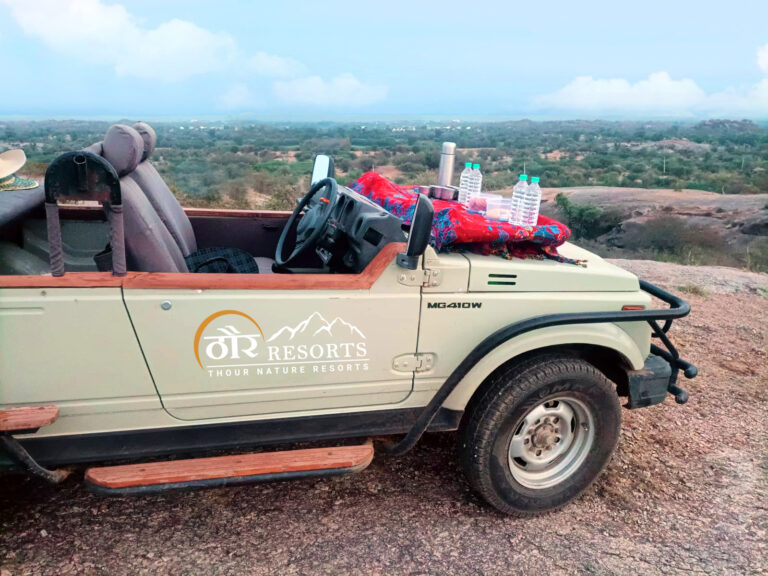
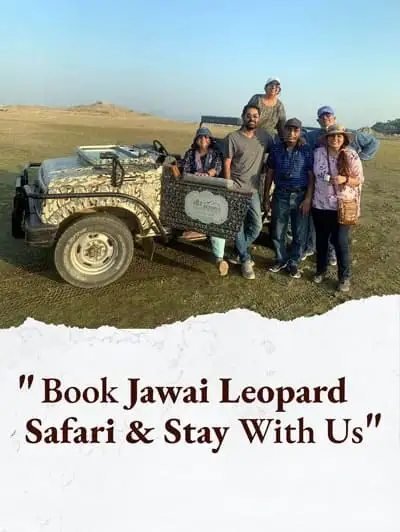
Safaris run in open gypsies through the granite hills close, unobstructed views that a fenced park can’t match.
Timings are set seasonally and can shift. Confirm current slots when you book.
Beyond leopards, the dam and surrounding scrub support striped hyenas, jackals, jungle cats, nilgai, mugger crocodiles and monitor lizards. Book a general wildlife safari separately if you want that fuller picture.
Where to Stay in Jawai
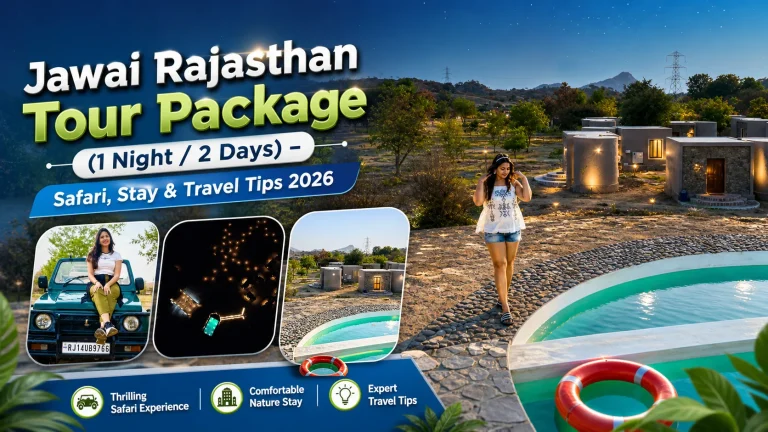
Thour Nature Resorts Jawai puts you inside this landscape, close enough to the hills that you’ll hear them before you see anything; a langur’s alarm call, or nothing at all, which in leopard country is its own kind of information. The resort’s luxurious tents and cottages are fully equipped with modern amenities and offer comfort. A pool on the top of a hill is another captivating service offered by this resort where you can relax after safaris. Whether you’re traveling solo or with family, the resort is built around easy access to both leopard safaris and the quieter side of Jawai. This is one of the best Jawai Resorts.
Travel Tips for Visiting Jawai
- Book safaris in advance, especially October–March, to secure a slot and an experienced tracker.
- Pack for both heat and cold – binoculars, a zoom-capable camera, sunscreen, insect repellent, and warm layers for winter mornings and evenings.
- Wear neutral colors that blend with the rocky terrain.
- Stay quiet on safari and follow your guide, it protects you and the leopards.
- Built in a jungle safari, a village visit, and a Jawai high-tea beyond the core leopard drive.
Jawai vs. Ranthambore: How They Compare
Frequently Asked Questions
How many leopards live in Jawai?
Rajasthan Forest Department estimates put the population at roughly 50-70 leopards across the reserve and surrounding hills.
What is the best time to visit Jawai for leopard sightings?
October-March offers the most comfortable safari conditions; April-June, despite the heat, tends to bring leopards closer to water, which can improve sighting odds.
How long does a Jawai leopard safari last?
Safaris typically run 2-3 hours, in separate morning and evening slots by season.
Is Jawai a wildlife sanctuary or a national park?
Neither. It’s the Jawai Bandh Leopard Conservation Reserve, formally notified by the Rajasthan Forest Department in 2010, which is what allows for its more open, less-fenced safari style.
Where is the best place to stay for a Jawai leopard safari?
Thour Nature Resorts Jawai is set within the reserve area itself, close to safari zones with full resort comfort.
Ready to see it for yourself?
Book your stay at Thour Nature Resorts Jawai and start planning your Jawai leopard safari.