 +91-9784559999
 info@thournatureresorts.com
Yes. Jawai is a formally notified Leopard Conservation Reserve with an unusually stable, decades-old human-leopard coexistence record — but “safe” here means something specific, and no honest guide should promise you a guaranteed sighting or a tame animal. Here’s what’s actually true, verified against the region’s forest department records and on-the-ground reality.
In this guide
What Jawai Actually Is
Jawai isn’t a national park, and it isn’t informal tourism either — it sits in a category most travellers have never heard of. The Jawai Bandh Leopard Conservation Reserve was formally notified on 23 February 2010 by the Rajasthan Forest Department, covering roughly 19.79 sq km in the Sumerpur tehsil of Pali district.
A Conservation Reserve is a distinct legal designation under India’s wildlife protection framework; it doesn’t come with the fixed gates, forest-department-run safaris, or permit system you’d find at Ranthambore or Sariska. Instead, the land includes private holdings, Rabari grazing tracts, and village areas, with safaris run through a community-regulated model rather than a government-ticketed one. That’s a real, legally recognized status — just a different kind than most people expect.
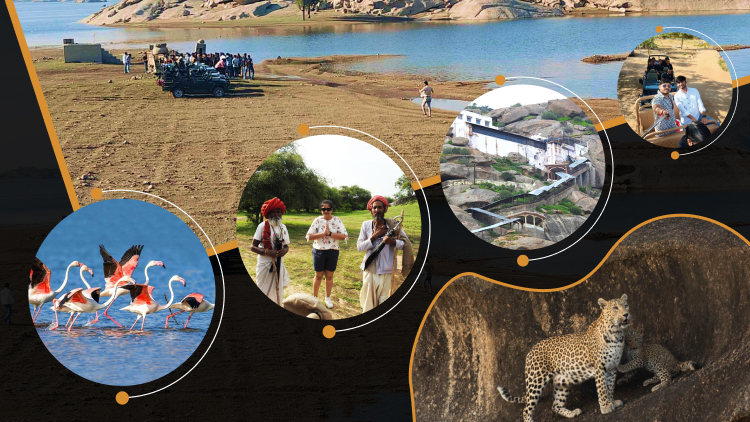
The terrain explains why this works. Jawai sits on the edge of the Aravalli range, among the oldest hill systems on the planet, and the landscape is granite outcrop and boulder, not forest canopy. Leopards here den in caves and rock crevices rather than dense cover, which is also why they’re seen here more often, and more openly, than almost anywhere else in India.
Why the Coexistence Here Is Real, Not Marketing
What makes Jawai unusual isn’t that its leopards are gentle; they aren’t, and no responsible source should suggest otherwise. It’s that the Rabari — a semi-nomadic pastoral community who’ve herded goats, sheep, and camels across this land for generations — have sustained a working tolerance with the cats that has nothing to do with domestication.
Many Rabari are devotees of Shiva, traditionally depicted wearing a leopard skin, and the community regards leopards as sacred, protector figures rather than threats to be driven out. Livestock losses do still happen — leopards take goats and sheep, and that’s part of living alongside a predator — but they’re generally absorbed rather than met with retaliation, rooted in this belief system rather than any special leniency on the leopard’s part. It’s still common to see priests walking to hilltop temples at dawn within sight of a resting leopard, largely undisturbed. That’s genuinely remarkable to witness, and it’s a cultural fact, not a safety guarantee.
What “Safe” Actually Means Here
Sightings at Jawai are among the most reliable for wild leopards anywhere in India — but never guaranteed, and any operator promising a 100% sighting rate isn’t being straight with you. Leopard movement follows real patterns: den locations, water access, prey availability, territory. Trained local trackers read these patterns closely, which is why safaris here tend to be more consistent than the odds alone would suggest, but a den day is still a den day.
Safaris run in guided jeeps at dawn and dusk, when leopard activity peaks, with drivers and trackers who know individual cats’ ranges and habits the way you’d know a neighbour’s routine. Our Jawai safari do’s and don’ts covers how to conduct yourself in the vehicle, which matters more than most first-time visitors expect.
Away from the safari, the more relevant safety question is what happens at your accommodation after dark, in a landscape where leopards, striped hyenas, and jackals all move through at night — and that’s a matter of the property’s actual precautions, not the animals’ temperament.
Beyond the Leopards
Jawai’s identity is bigger than one species. Jawai Dam, built between 1946 and 1957 on the Jawai River, a tributary of the Luni, anchors the region’s ecosystem — drawing marsh crocodiles into its waters and significant migratory birdlife in winter, including flamingos, cranes, and pelicans.
Striped hyenas, jackals, and monitor lizards are regularly reported across the rocky terrain; our guide to the animals found in Jawai covers the wider cast in detail. The granite hills, the dam, and the Rabari villages together make Jawai a place worth visiting for its full landscape, not just its leopards.
How Thour Nature Resort Approaches Safety
Rather than making blanket promises, our approach is practical: trained staff monitor the property after dark, guests are briefed on movement protocols around the grounds, and our guides carry detailed, current knowledge of local leopard activity before every safari. We’re glad to walk any guest through the specifics of our safety setup directly; it’s the kind of detail worth getting exactly right, not summarised in a paragraph.
What we can say without hedging: attentive staff, a property designed with this landscape in mind, and evenings that end by the fire, not spent worrying. The Luxury Tents and Cottages sit close enough to the hills that you’ll often hear them before you see anything at all — a langur’s alarm call carrying across the rock, which in leopard country is useful information, not a threat.
Frequently Asked Questions
Is Jawai a national park?
No. Jawai is a notified Leopard Conservation Reserve — a different legal category from a national park or wildlife sanctuary. It’s community-regulated rather than forest-department-run.
Are leopard sightings guaranteed on a Jawai safari?
No reputable operator can guarantee a sighting. Jawai’s odds are among the best in India for wild leopards, but leopards may stay denned depending on weather, timing, and territory.
Have leopards ever attacked people in Jawai?
Jawai has a long-standing record of low human-leopard conflict, rooted in Rabari cultural tolerance and the open terrain, which makes leopards more visible and less likely to surprise anyone at close range. That said, they remain wild predators and should never be approached or treated as tame.
Is it safe for families and elderly travellers?
Yes. Safaris are jeep-based and guided, and most resorts, including ours, are set up for a range of ages and mobility levels. Ask about specific accessibility needs when booking.
When is the best time to visit Jawai?
Winter, from October to March, is generally the most comfortable for safaris and best for migratory birdlife on Jawai Dam. In summer, leopards are more often spotted near water sources; the rainy season is quieter and suits nature lovers who don’t mind fewer guaranteed conditions.
Planning Your Stay
Jawai is well-connected by road from Udaipur, Jodhpur, Ahmedabad, Jaipur, and Mount Abu, making it an accessible add-on to a broader Rajasthan itinerary rather than a remote, hard-to-reach detour.
Ready to see it for yourself? Get in touch to plan your stay in our Luxury Tents or Spacious Cottages — we’ll walk you through exactly what a Jawai safari involves, the reserve’s real status, and what to expect after dark, before you book.